This is the next step in undoing the Leandro decision.
Because it’s part of a bigger plan that deliberately coincides with the expansion of vouchers.
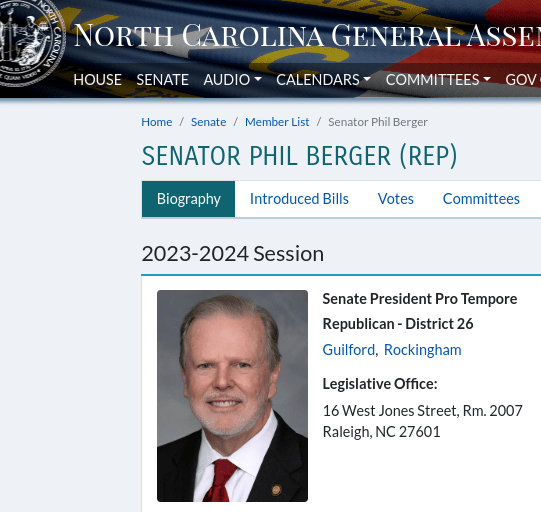
In a court order dated Oct. 20, the Supreme Court agreed to hear the appeal filed by Sen. Phil Berger and House Speaker Tim Moore that a trial judge lacked the jurisdiction to say the state owes schools $677.8 million.
In its majority decision, Republican Associate Judge Phil Berger Jr. — the son of Sen. Berger — said many matters remain unresolved in the long-running Leandro school funding case. Among them, he wrote, is whether the prior order should apply to the whole state or just the five school districts that started the lawsuit.
“If public school students or local school boards who are not parties to this case believe the remedial order does not sufficiently address the educational failure in their districts, are they bound by the remedial order?” Berger Jr. wrote. “If so, how were their rights adjudicated without their presence in the suit — an elementary principle of jurisdictional law.”
It is not difficult to see that the NCGA was waiting for the state supreme court to become an extension of the political powers in Raleigh after the last election cycle.
Berger and Moore did not ignore Leandro. They never did.
Their immediate reaction was to not honor it – loudly and in public. And a plan to combat it was immediately implemented: take control of the state supreme court and overturn it.
Look at the drawing of new legislative maps. The newly released versions were only possible with a state supreme court reversing a judgement that the same court issued last year. If they did it with legislative maps, they can do it with the Leandro decision.
Throw in some Biscuitville meetings, a public records law change, a defection of parties by a “scorned” legislator, a prolonged budget process, some casino action, a Medicaid expansion poker game, and a lot of political grandstanding, this move to get the state supreme court to “reconsider” the Leandro decision is not that surprising.
Especially when this dynamic exists:
 caffeinated rage