When the state of North Carolina had to have federal emergency funds to help with “learning losses” from the pandemic, it provided yet another example of how this state has horribly fulfilled its constitutional obligation to fund public education.
Why?
Because the learning losses were not just due to a once-in-a-lifetime worldwide pandemic, but that once-in-a-lifetime pandemic showed how easily existing conditions that have been harming public education could be exacerbated.
Vacancies that have never been filled did not mean that duties and services were necessarily eliminated; it meant that fewer people were having to do more with less. And while the economy seems to have made a recovery, that does not mean that the state of North Carolina has allowed that to translate to more funding. Just look at the salaries that have barely increased while the state surplus has kept growing to allow for more corporate tax breaks.
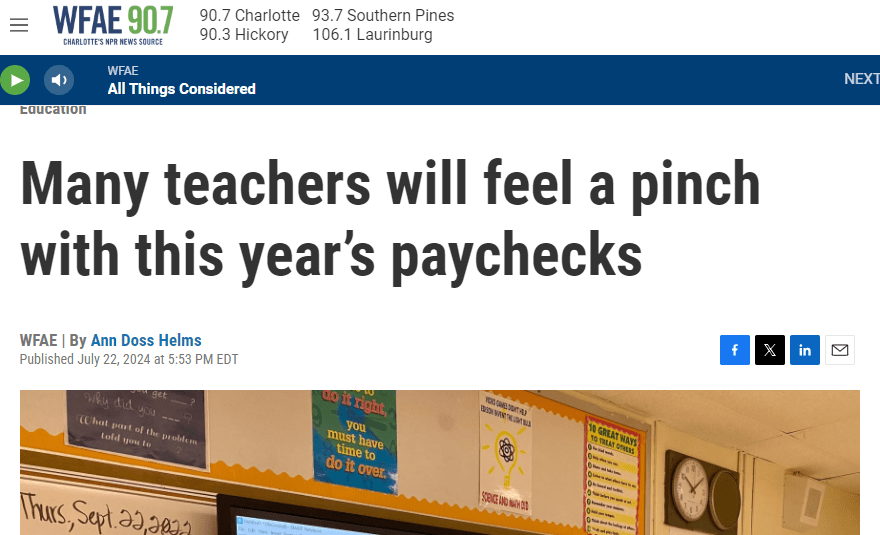
“Early estimates suggest that more than $1 billion of the $2.5 billion already expended in ESSER III funding in North Carolina has been spent on personnel and compensation, nearly 80 percent of which is tied to personnel with a direct impact on academics,” policy researcher Matthew Springer wrote in EducationNC last week. He argues that districts will have to work hard and get creative to counteract shrinking paychecks and disappearing jobs.
And this part really resonated with this teacher:
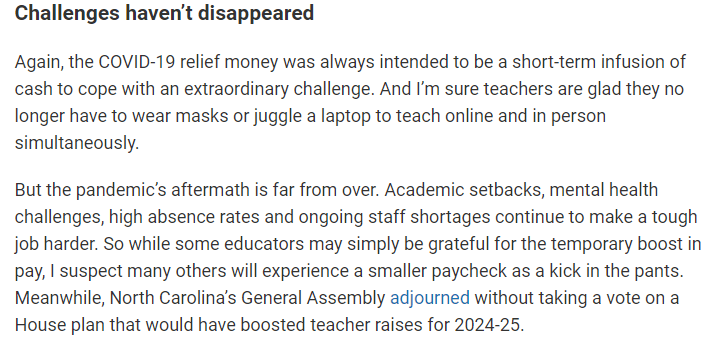
The challenges have not disappeared. They have been there for years – a creation of a miserly bunch of Scrooges in Raleigh who have not only gerrymandered their districts but teacher salaries as well.
Meanwhile, North Carolina’s General Assembly adjourned without taking a vote on a House plan that would have boosted teacher raises for 2024-25.
 caffeinated rage