Teach in North Carolina public schools for the last twenty years and you will experience the negative effects of the forced “reforms” that have been placed on public schools.
This past Thursday in Winston-Salem, a non-partisan candidate forum was held for local and state candidates for a variety of offices ranging from governor, state superintendent, General Assembly, and county commissioner.
While all candidates did not have to answer every question posed to the panel (because of the responsibilities of their presumed offices), what many said on certain issues very much gave audience members insight on the scope of their understanding of issues.
Michele Morrow was in attendance. Here’s what I noticed most.
She does not know how schools are truly funded or have a grasp of how underfunded they are.
During a question dealing with education and how we need to recruit and retain teachers, Morrow made a comment to the extent that 50% of the taxes we pay to the state and 30% of what we pay in local taxes goes to K-12 schools. She further said that it should be enough but that most of that money should be going to our teachers in salaries.
Actually, most of the money already does go to salaries. Has been the case for decades. As public sector employees, teachers get a salary and benefits. If you look at DPI’s annual report on the state’s public school budget, you can see that.

What Morrow displayed was a lazy, uneducated view of how schools in North Carolina are funded.
First, if she were to look DPI’s report on spending she would see this:

While that might not look like much, that’s the percentage of money the state receives that is given to public K-12 schools. The percentage now is the same as the percentage right after the Great Recession, but the pool of money that it is drawing from is treated differently. Corporate tax rates have steadily been lowered and more monies put to vouchers.
What that means is that while the percentage of monies given to public K-12 schools in the state budget might be around the same level, the monies it draws from rely more on people’s state income taxes – not corporate taxes. And what costs were in 2009 for materials, services, and resources surely do not match those same costs now.
Have our salaries as teachers increased at that same rate? From DPI’s report:

Morrow might want to see how the average salary in NC is still bolstered by teachers with graduate degree pay and local supplements. Graduate degree pay was abolished in 2014 for new teachers and if she took a look at the current teacher salary scale, Morrow would have a hell of a time explaining how that average pay could be sustained with the current trends.
Furthermore, local supplements for many small rural counties are miniscule or nonexistent. The state has to help them with that as well just so they can have enough of a teacher workforce.

Nearly half of those systems shaded in the above graphic were just ravaged by Hurricane Helene.
Morrow also forgets that the state’s financing of public education also includes post-secondary schools like the UNC University system and community colleges.
For her to say that all of that “50% of taxes we pay to the state” goes to K-12 public schools is ignoring that.
And Morrow does not understand the LEANDRO case – its origins and its implications.
She spent a good amount of her time in one response talking about the original school systems that were involved in the LEANDRO case. She named Rowan County.
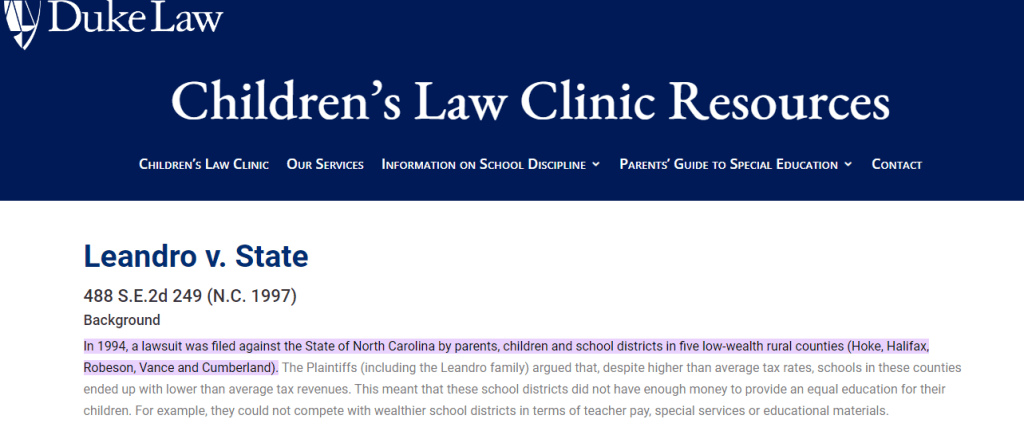
“In 1994, a lawsuit was filed against the State of North Carolina by parents, children and school districts in five low-wealth rural counties (Hoke, Halifax, Robeson, Vance and Cumberland).“
Rowan-Salisbury School District was not one of those school systems. She claimed that Rowan-Salisbury spent much more on its students than other LEAs making the inference that since they spend so much more than others, why should they be seeking even more money as a LEANDRO plaintiff?
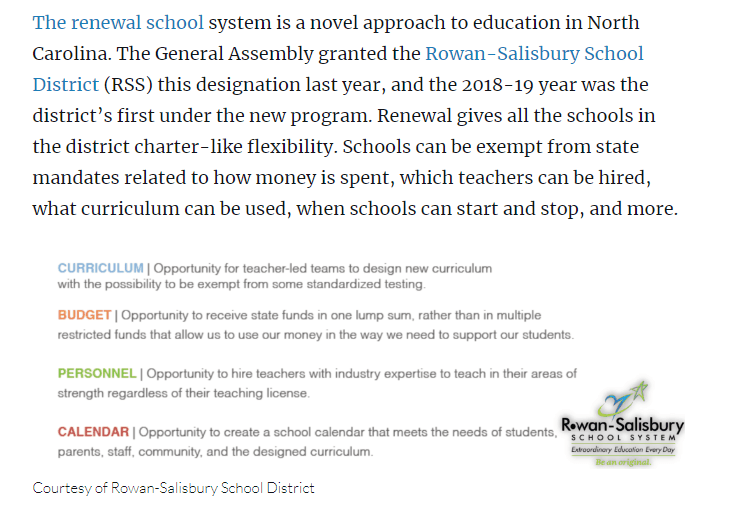
Actually Rowan-Salisbury is the only LEA in the entire state to be a “renewal district.”
 caffeinated rage