This is a quick and dirty guide to give anyone a basic understanding of how school systems (and vouchers) are funded in North Carolina. My own school system, Winston-Salem / Forsyth County Schools (WSFCS) will serve as the running sample throughout.
There are 115 LEAs (local education agency) or school systems in the state each with its own local school board.

Each “public school” receives a school performance grade and an annual report card.
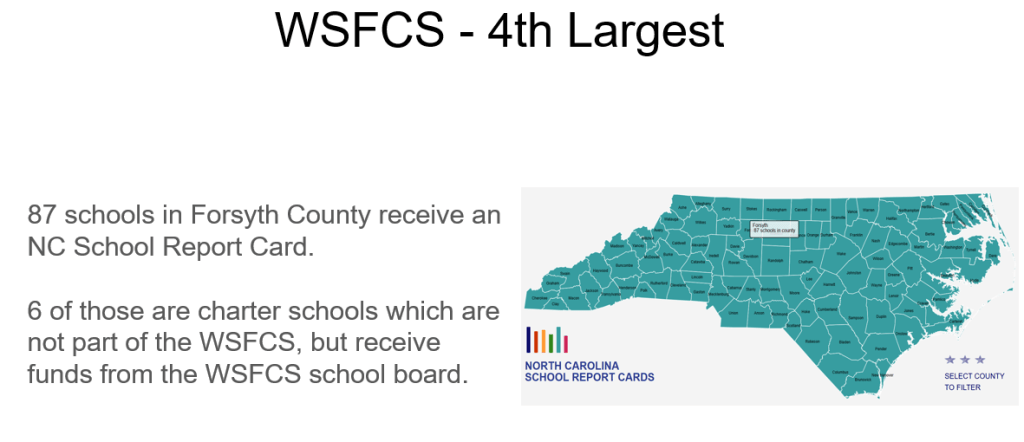
A local school board has to give a charter school for any student in their LEA who attends that charter school money per student no matter where that charter school is located. That charter school could be in another county or city system. Furthermore, the charter school is under the oversight of a state agency, not the local school board.
If there is a private school that exists which takes voucher money within a county/city LEA boundary, the state will give money directly to the private school. Anyone can see the amounts given to each specific school.

Source: Public Schools First NC
Before vouchers were in place and charter schools were created, all money earmarked for students and education wne to traditional public schools. With voucher money and more charter schools, the state now helps finance three distinct “systems” – all governed differently.
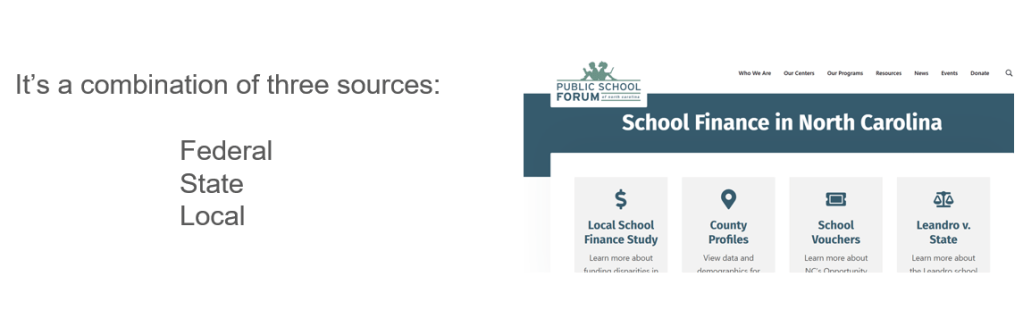
All NC public schools have three distinct funding revenues.
The percentages from each of those sources does vary a little, but the pandemic funds (ESSER) changed that landscape considerably when they dried up last fall.
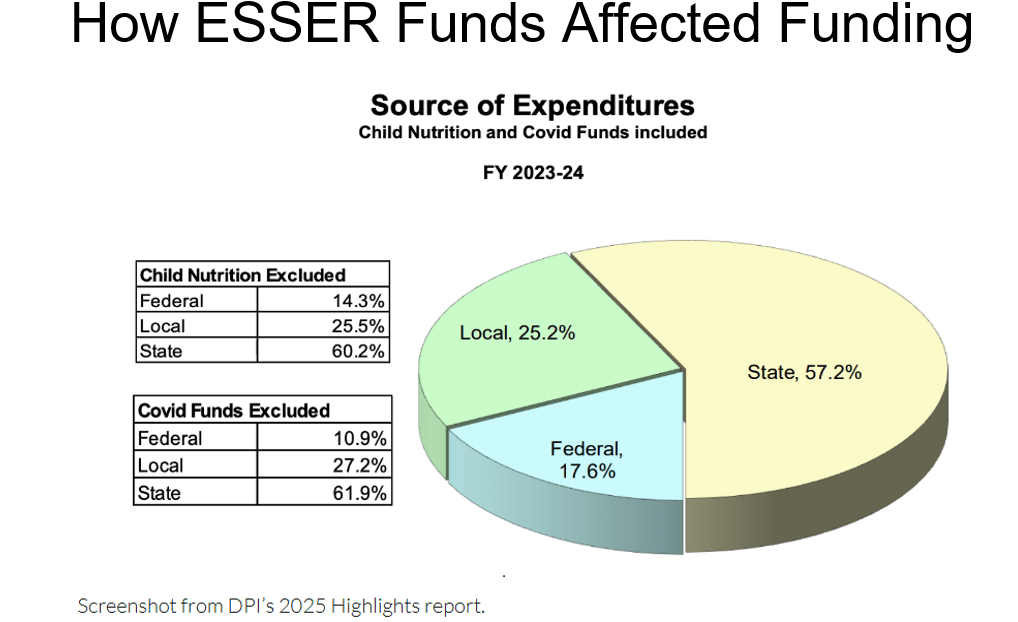
And as reliance on the state grows from that adjustment, please remember that the state of North Carolina does not do a great job of funding its school systems.

While the state can claim a higher percentage of its budget (general funds) goes to public schools, they can alter how much money is in the general fund to begin with through corporate taxes – which they have been lowering for years.

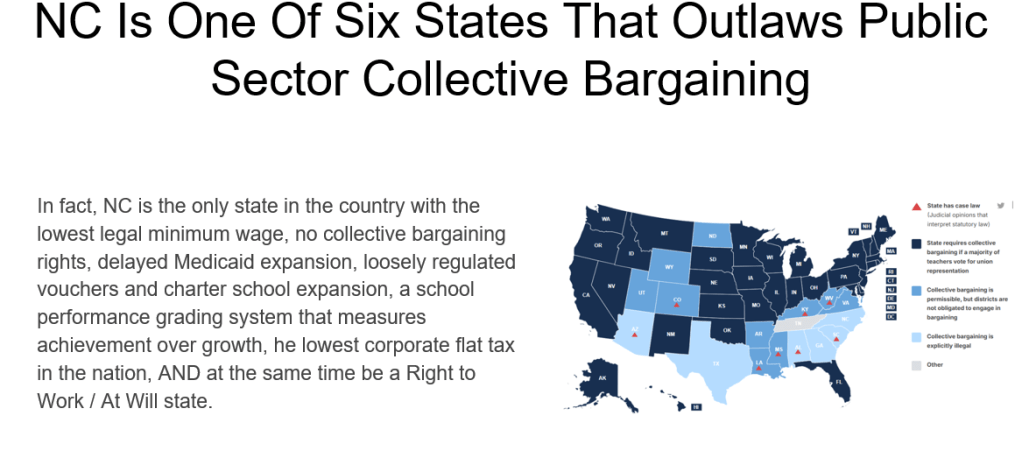
Add to that, it is against the law in this state for public sector employees to collectively bargain. NC is one of 6 states that outlaws it.
Of the 10 states in the map below, guess how many give teachers a raise for having a graduate degree obtained after 2014?

9 of them. The only one that does not is North Carolina. What that means is that the state spends less for the salaries of teachers than it would have if they did not get rid of graduate degree pay.
So when you are a state that does not pay its teachers well to begin with, intentionally lowers corporate tax rates to limit what is in the general funds, refuses to create new budgets on time, and ignores the LEANDRO decision, then a local school system can get into financial straights quickly.
Schools can get more funding through bond referendums. But those have to be voted upon by the public after it goes on a ballot and the requirements for those bonds are established by local/state statutes – not the school system or the school board.
 caffeinated rage