One of the more interesting bills filed so far this legislative session is SB 92, the “Released Time Education Act”.
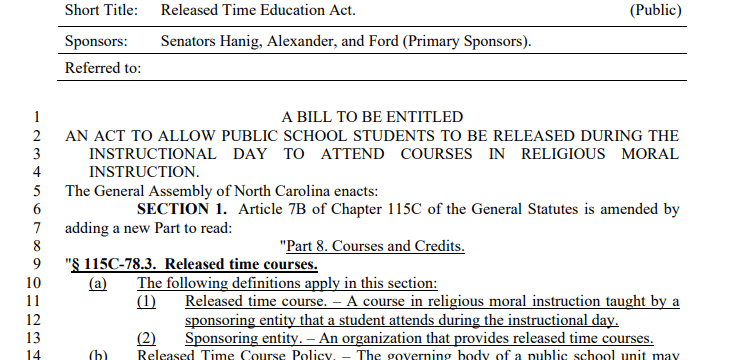
More about this bill is explained in this report:
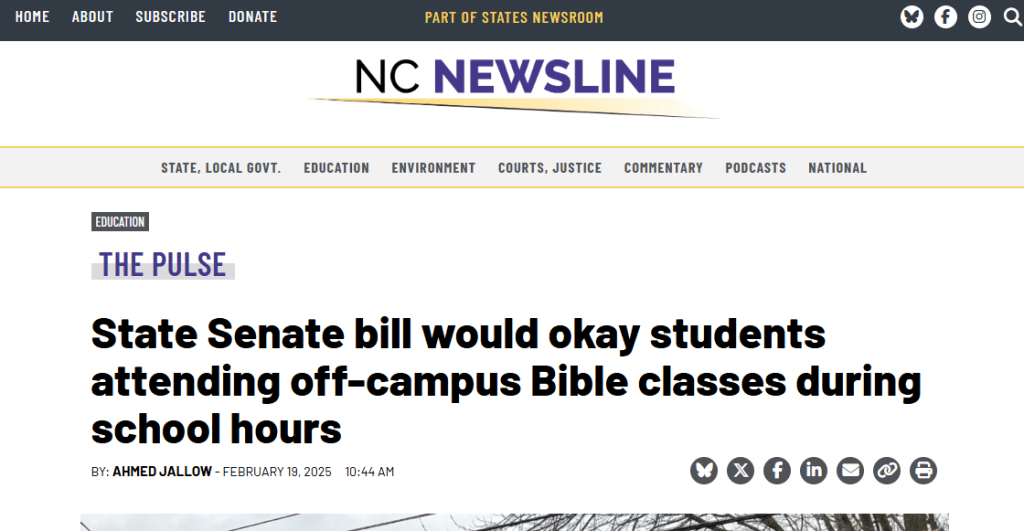
“The legislation comes as LifeWise Academy, a national organization that offers Bible education to public school students during school hours, has been preparing to expand into North Carolina, registering to operate in the state last year and seeking a state director.
The bill requires parental consent, prohibits using public funds for the programs, and allows up to two elective credits for completed courses.
Organizations offering the program would be required to maintain attendance records and provide course syllabi to school boards upon request. They would also be responsible for student supervision and liability during released time courses.
LifeWise, citing a little known 1952 Supreme Court decision in the case of Zorach v. Clauson, operates under the premise that released time religious instruction is constitutional if it occurs off school property, is privately funded, and with parental permission.”
So, some obvious questions come to mind.
Did LifeWise give to the campaigns of any of the legislators who are sponsoring this bill? Have they in other states?
Will the legislators be willing to let students who get instruction in other religious texts that are not the Bible use this bill to get high school credit during school hours?
Why can’t the students get this “religious instruction” on their own time?
And isn’t this just another was to promote a brand of Christianity in North Carolina under the guise of “curriculum” and “instruction”?
The report from NC Newsline also stated, “The organization frames the initiative as reclaiming “the greatest missed opportunity” for churches to reach the next generation.”
Using “churches to reach the next generation” on school days? By taking students out of public schools and affecting enrollment numbers and budgeting?
Oh, but we are in NC. We already bankroll millions of taxpayer dollars to unregulated private religious schools.

 caffeinated rage
Here is another example of legislators deducting more teacher-student contact time while holding public school educators accountable for student progress on standardized end-of-year exams.
LikeLike